

2026-11-12T03:30:14
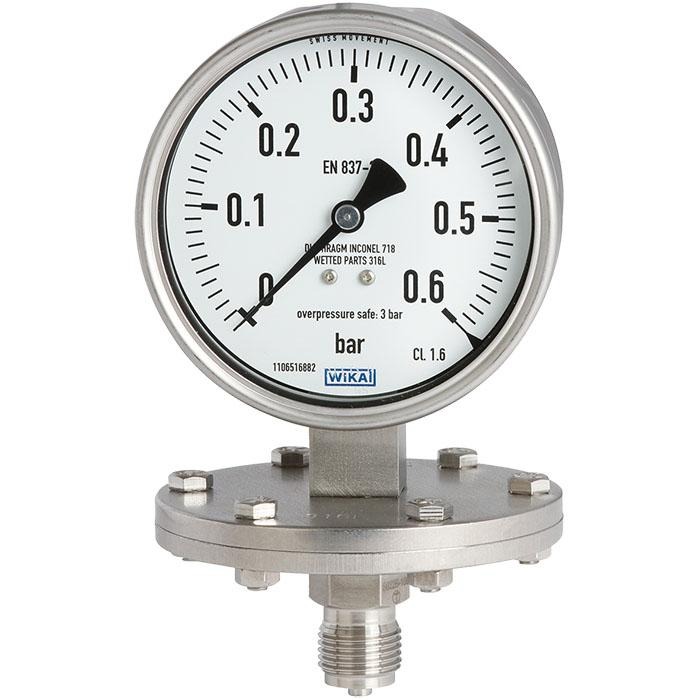
Q1. What is a Diaphragm Pressure Gauges? Diaphragm Pressure Gauges measures pressure using a flexible membrane. It is commonly used for low-pressure measurement and selected industrial processes involving viscous, contaminated or corrosive media. Q2. How does a diaphragm pressure gauge work? Pressure causes a flexible diaphragm to deflect. A mechanical linkage transfers this movement to a pointer that indicates the pressure on a dial. Q3. What is the difference between a diaphragm gauge and a Bourdon tube gauge? A diaphragm gauge uses a flexible membrane as its sensing element, while a Bourdon tube gauge uses a curved elastic tube. Diaphragm gauges are often selected for low-pressure applications and certain challenging process media. Q4. Are diaphragm pressure gauges suitable for corrosive liquids? Yes, when the diaphragm and other wetted materials are compatible with the liquid. Specialized materials or protective coatings may be required. Q5. Can diaphragm pressure gauges measure low pressure? Yes. Their relatively large diaphragm sensing area can make them suitable for low-pressure measurement. The minimum measurable pressure depends on the model. Q6. What materials are used in diaphragm pressure gauges? Depending on the design, materials can include stainless steel and specialized options such as Hastelloy, tantalum or PTFE coatings. The correct selection depends on the process conditions. Q7. What is the difference between a diaphragm pressure gauge and a diaphragm seal? A diaphragm pressure gauge uses the diaphragm as its sensing element. A diaphragm seal is an accessory that isolates a separate pressure instrument from the process medium and transfers pressure through a fill fluid.
Have a question? Ask here!
Required fields are marked *