

2026-11-19T03:30:05
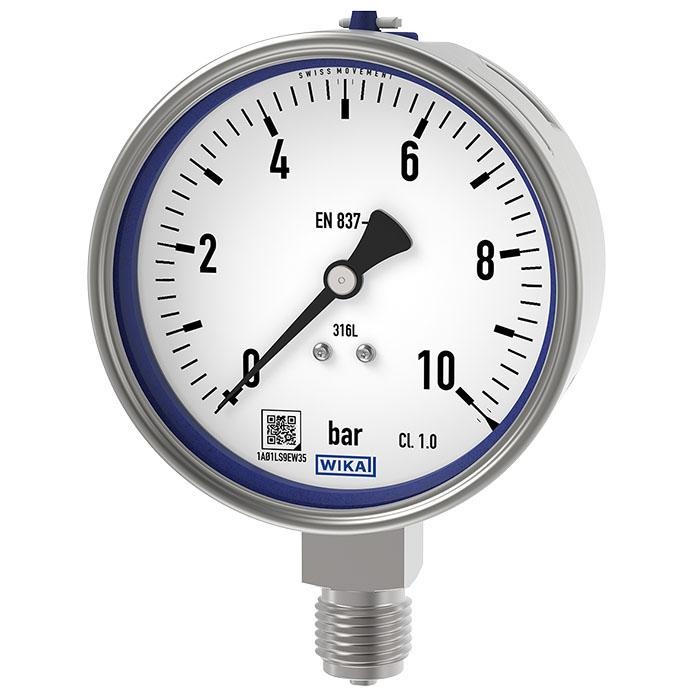
What is a Pressure Gauge used for? A pressure gauge measures and displays the pressure of gases or liquids in systems such as pipelines, pumps, compressors, tanks and industrial machinery. Q2. What are the main types of Pressure Gauges? Common types include analog, digital, Bourdon tube, diaphragm, differential and glycerine-filled pressure gauges. These categories can overlap because they describe different measurement mechanisms or design features. Q3. What is a Bourdon tube pressure gauge? A Bourdon tube pressure gauge uses a curved elastic tube that deforms in response to pressure. Its movement operates a pointer that indicates the pressure on a dial. Q4. Why are some Pressure Gauges Glycerine-filled? The liquid filling helps dampen pointer movement caused by vibration and pressure pulsation, improving readability in suitable operating environments. Q5. What is the difference between a pressure gauge and a pressure transmitter? A pressure gauge generally provides a local pressure indication. A pressure transmitter converts pressure into an electrical signal that can be sent to a control system, monitoring device or automation equipment. Q6. What units are used to measure pressure? Common units include pascals (Pa), kilopascals (kPa), megapascals (MPa), bar, pounds per square inch (psi) and kilograms-force per square centimetre (kgf/cm²). Q7. How often should pressure gauges be calibrated? Calibration frequency depends on the application, manufacturer guidance, applicable regulations, operating conditions and required measurement reliability. A suitable schedule should be established for the specific instrument and process. Q8. Which pressure gauge is suitable for industrial applications? The correct gauge depends on the pressure range, medium compatibility, temperature, vibration, required accuracy, connection type and installation conditions. There is no single gauge suitable for every industrial application.
Have a question? Ask here!
Required fields are marked *